30 Common HTML Elements
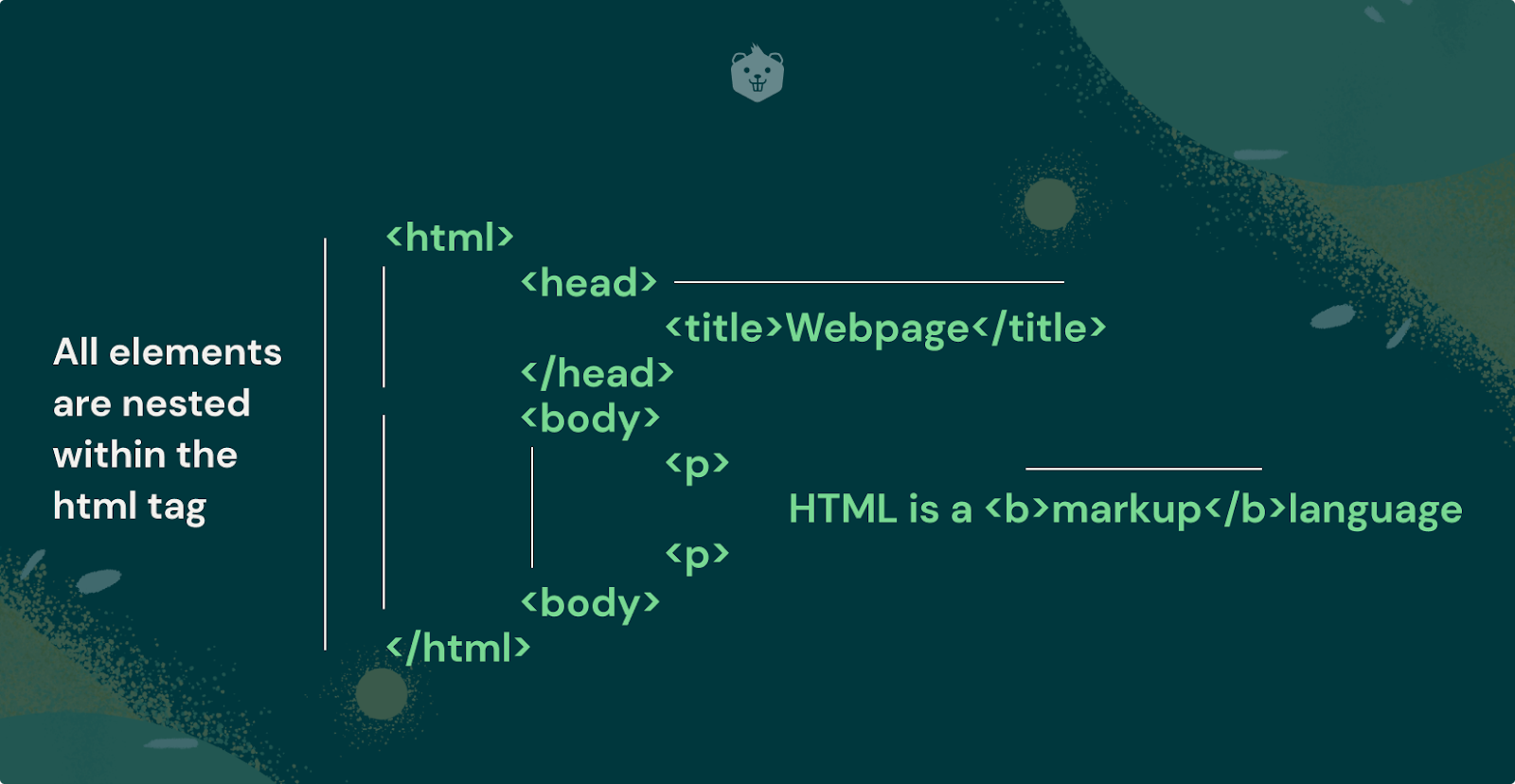
- <html>
- Root elemet of an HTML document.
- <head>
- Contains metadata and page settings.
- <title>
- Defines the title shown in the browser tab.
- <meta>
- Provides metadata such as character set or description.
- <link>
- Links esternal resources like CSS files.
- <style>
- Contains internal CSS styling.
- <script>
- Embeds or links JavaScript.
- <h1>
- Main heading of the page.
- <h2>
- Subheading used for structure.
- <p>
- Paragraph of text.
- <a>
- Creates a hyperlink.
- <img>
- Displays an image.
- <ul>
- Unordered (bulleted) list.
- <ol>
- Ordered (numbered) list.
- <li>
- List item inside UL or OL.
- <div>
- Block-level container for styling text.
- <header>
- Defines a page or section header.
- <footer>
- Defines a page or section footer.
- <nav>
- Navigation links section.
- <section>
- Defines a thematic grouping of content.
- <article>
- Independent, self-contained content.
- <em>
- Emphasizes text; usually displays as italic.
- <br>
- Inserts a line break inside text.
- <strong>
- Indicates strong importance; usually displays as bold.
- <labels>
- Connects text labels to form inputs for accessibility.
- <select>
- Creates a dropdown menu.
- <option>
- Defines an item inside a <select> dropdown.
- <hr>
- inserts a horizontal like to separate content.
- <iframe>
- Embeds another webpage or media inside the current page.
- <aside>
- Represents content related to the main content, like a sidebar.